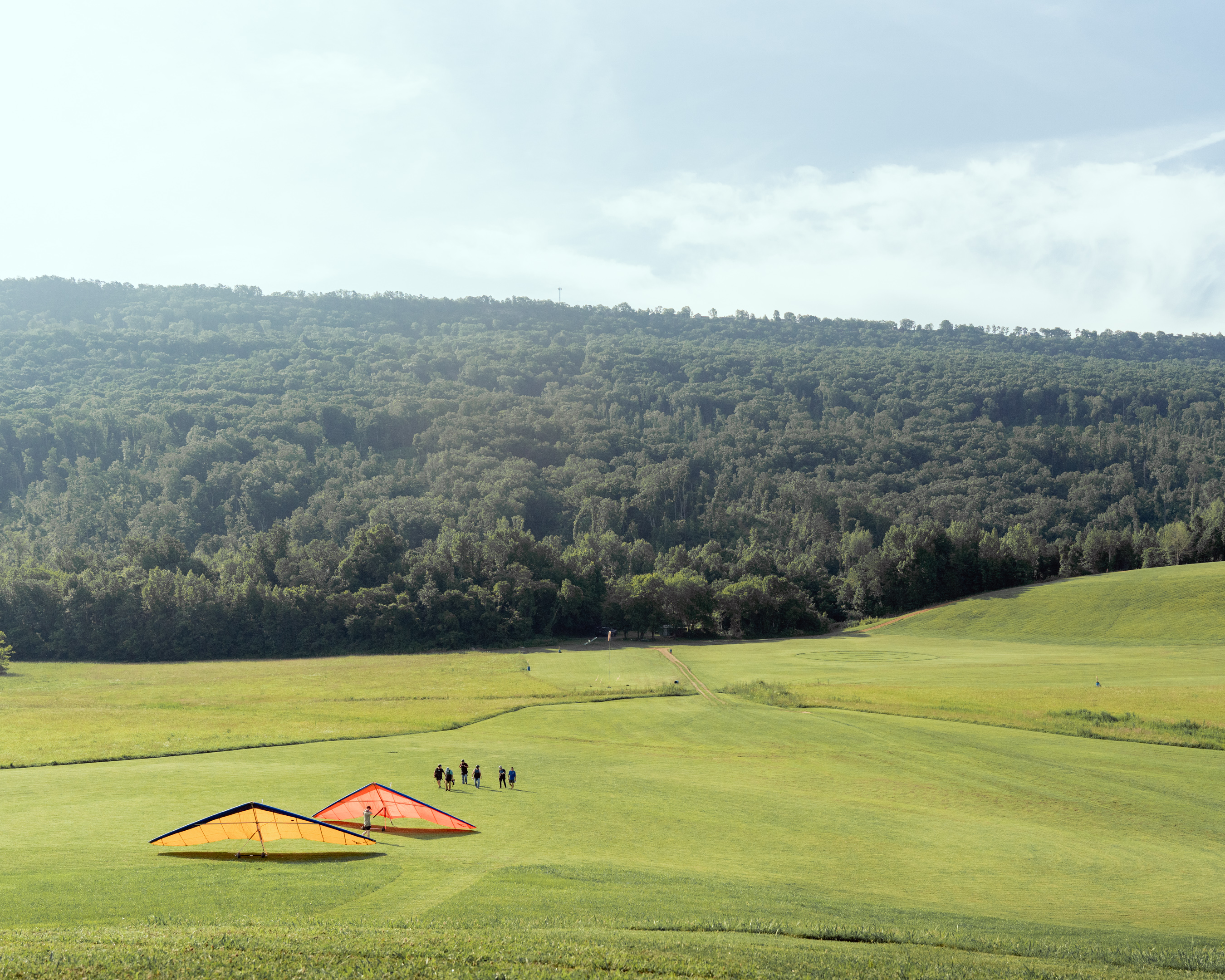
The field is someone’s soybean crop. You know this because you landed gently enough to notice.
Your glider is down, you’re unhurt, and you’ve already done a quick mental inventory: phone — yes, water — half a bottle, car keys — at launch, 34 miles that way. The farmer is walking over from the treeline with an expression that could go either direction.
This is the part they don’t put in the USHPA training manual.
You shake the farmer’s hand. He’s fine, actually — curious about the glider, wants to know how far you came. You get a photo with him in front of your wing and he says you’re welcome back anytime. You’ve been luckier than most.
Then you pull out your phone and do what every landed-out pilot does: you open the group chat.
The one with 47 people in it. The one that’s mostly memes and launch conditions and that one guy who sends weather balloon data at 6 AM. You type something like “hey — landed near Crossville, anyone in the area?” and then you watch the little clock spin while it uploads and then nothing happens for eleven minutes.
Someone reacts with a thumbs-up. Then the chat goes quiet again.
If you’re lucky, you know somebody. If you’ve been flying that park for a few seasons, you’ve got a handful of numbers in your contacts — the guy with the van, the couple who always seem to be driving back late, the instructor who feels responsible for you in a way neither of you have ever named. You text them directly. One of them picks up. Problem solved.
But if this is your first season, or you’re flying a park two states from home, or you just don’t have those connections yet? You’re sitting on a cooler by the side of a county road doing mental math on how much an Uber would cost for a 34-mile trip with a hang glider.
There’s a version of this that’s lighter and easier to overlook: body rides. Not a full retrieval — just getting back up to launch when your car is still at the bottom, or bumming a ride down from the LZ so you can get your gear and go again. It’s such a small ask that most people feel vaguely embarrassed making it. So they wait, or they walk, or they catch someone in the parking lot who’s heading up anyway.
The thing is, some of the best conversations in this sport happen in a truck bed on a dusty mountain road. It’s where you learn someone’s been flying for thirty years, or that the pilot who just crushed it on the XC run has been chasing the same goal for four seasons. There’s a reason people stick around after they’re done flying. The community is the point.
TowMeUp isn’t trying to change any of that. The goal is to make it easier to find your people when they’re not already standing next to you.
The retrieve and body ride features in TowMeUp work the same way: you post a request, and it goes to pilots at your park who are signed in that day. Your location stays private. Nobody outside the park sees anything.
When someone offers to come get you, you get a notification with their name, their photo, and how long they’ve been a member at their home park. One question: do you know this person?
Yes or no. That’s it. If yes, they get your GPS pin and you get their number. If no, the request stays open and they never learn where you are.
It sounds simple. That’s the idea. The “do you know this person?” gate is the one detail I’m most proud of, because it’s the kind of thing you only think to build if you’ve actually stood in a stranger’s field watching your phone battery drop.
This sport runs on informal trust networks that nobody talks about explicitly but everyone depends on. The tug pilot who answers their phone on Sunday afternoon. The person who always has a tow rope and never asks to be reimbursed. The couple who drives out to retrieve a pilot they’ve met exactly once, because that’s just what you do.
TowMeUp doesn’t replace any of that. It just makes it a little easier to find your people when they’re not already in your contacts — and gives you a way to be found when someone else needs a hand.
The farmer’s field is still your problem. But at least the ride home doesn’t have to be.